


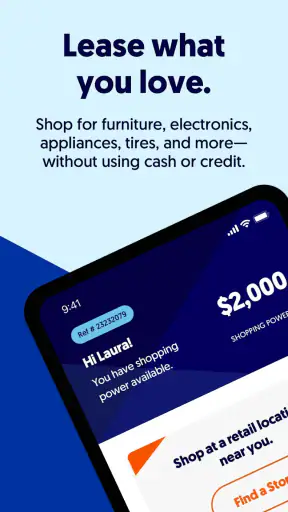

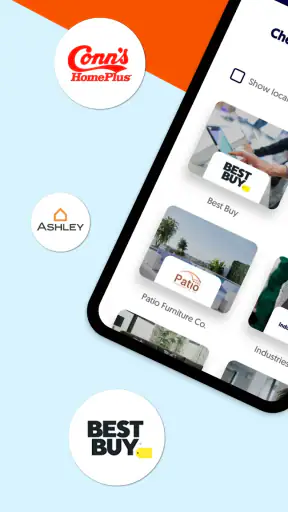
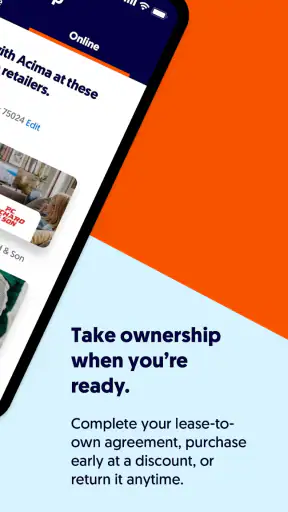
I approached Acima Leasing as a practical finance app rather than as a replacement for a full banking service. Its purpose is narrower: it gives shoppers a no-credit alternative to traditional financing, with the Acima name and leasing model at the center of the experience. That makes it potentially useful when an essential purchase cannot wait, but it also means you need to understand the agreement carefully before treating it like an ordinary payment plan.
In my experience, the app is most valuable as a starting point for checking whether this form of financing fits a particular purchase. It is free to install, aimed at Everyone, and comes from Acima. The app has passed the one-million-install mark, while its average sits at 3.8 from roughly four thousand six hundred ratings. Those figures suggest a widely used service with a mixed but meaningful reception, not an app I would recommend blindly to every shopper.
What the app is really useful for
The central appeal is access. A traditional credit application can be difficult for someone with limited credit history, damaged credit, or no desire to use a conventional credit card. Acima positions its service as a no-credit alternative, so the app may be worth opening when the usual financing route is unavailable or unsuitable.
That does not make it free money, and this is the first distinction I would keep in mind. A lease arrangement can cost more than paying cash, and the total obligation matters more than the size of the first payment. Before accepting anything, I would read the payment schedule, the early-purchase terms, the consequences of missed payments, and the final amount required to own the item. The app can make the process more accessible, but accessibility should not be confused with affordability.
A realistic use case would be replacing a broken household appliance when waiting for a savings goal is impractical. I could see someone using the app to explore an Acima option, compare the required payments with their monthly budget, and decide whether the purchase is genuinely necessary. That workflow is more sensible than opening the app after choosing an expensive item and assuming approval or manageable costs will automatically follow.
The service is less compelling for routine purchases, entertainment, or anything that can comfortably wait. If I already have enough cash, a standard retailer discount, a low-cost credit option, or a savings plan will often be easier to understand. The no-credit angle is the reason to consider Acima; without that need, the lease structure may not offer enough advantage.
Speed expectations during ordinary use
The current version is 5.3, and the app has been available since June 4, 2021. Those details matter less than how the app feels when a person is trying to complete a time-sensitive purchase. I would expect the basic browsing and account steps to be reasonably straightforward on a supported device, but I would not make a major financial decision based on the hope that every step will be instant.
Finance apps often depend on information checks, account details, and communication with a merchant or financing service. Even when the interface responds quickly, a decision or agreement may still require careful review. In other words, perceived speed has two parts: how fast screens open and how fast the financial process reaches a usable result. The first may feel smooth, while the second can naturally take more attention and time.
My practical advice is to begin before standing at a checkout counter. Give yourself time to enter information accurately, inspect the terms, and recover if a session expires or a connection becomes unreliable. Starting early also prevents the most common bad shortcut: accepting an agreement simply because a purchase feels urgent.
There is another useful speed trade-off. A quick application can help someone learn whether this route is worth considering, but quick approval should never replace comparison shopping. I would first write down the cash price, the expected lease payments, and any purchase option shown in the agreement. That small pause makes the app more useful because it turns a fast decision into an informed one.
What happens during heavier use
Heavy use does not necessarily mean running the app for hours. For this service, a demanding moment is more likely to involve moving through several financial steps while switching between the app, a retailer, email, and personal budgeting tools. That is when small interruptions become more important than raw animation speed.
I would avoid beginning the process while multitasking aggressively on an older phone with many apps open. Keep the device charged, use a dependable connection, and have the information needed for the application ready. These are simple habits, but they reduce the chance of losing progress or entering details in a hurry. They also make it easier to stop and reconsider the agreement instead of treating every delay as a reason to continue immediately.
A second practical tip is to save your own record of the offer before accepting it. I would note the item, the payment amount, the schedule, the ownership conditions, and the total cost in a private budget note. That is not a feature I am claiming the app provides; it is a safer workflow around the app. It gives you something to check later if you forget the terms or need to compare the lease with another option.
The app may also be used at different points in a purchase journey, and that can create confusion. A shopper might research at home, return to the process in a store, and then revisit the account later. I would treat each return as a chance to verify the current agreement rather than assuming that an earlier screen tells the whole story. Financial details deserve a fresh look whenever the purchase, merchant, or payment choice changes.
For households managing a tight budget, the most important heavy-use test is not whether the phone becomes warm or the interface slows down. It is whether the payment fits alongside rent, utilities, food, transport, and existing obligations. The app can help initiate a financing route, but it cannot make an unaffordable monthly commitment safe. That judgment remains with the person using it.
Reliability and recovering from interruptions
The rating of 3.8 shows that the experience is not universally smooth. I would interpret that as a reason to keep expectations realistic, especially when the app is involved in a purchase that cannot easily be postponed. A middling average does not prove that every user will encounter a problem, but it does suggest that reliability should be judged alongside the financial value of the service.
My recovery plan would be simple. If a screen stops responding, I would avoid repeatedly submitting the same information. I would first check whether the action already went through, then reopen the app and review the account or confirmation area before trying again. Duplicate attempts are especially undesirable in a financial workflow because they can create uncertainty about what was actually submitted.
If the app closes or the connection drops, I would return calmly rather than starting a second application from scratch. Keep any confirmation details, screenshots, or personal notes that are appropriate for your records, and check the agreement before making another attempt. This approach is useful even when the app is stable because it separates a technical interruption from a financial decision.
Reliability also includes clarity. I would not rely on a notification, a brief approval message, or a single payment figure as the complete explanation of the arrangement. The important information is the full set of obligations and conditions. If a term is unclear, pause and seek clarification through the official Acima support route or the merchant handling the purchase instead of guessing.
One limitation is that no app can remove every point of friction from a financial process. A person may still need to coordinate with a retailer, check identity details, or understand an agreement that uses unfamiliar language. That is why I see Acima Leasing as a tool for access and organization, not as a fully guided financial adviser. It can support a decision, but it should not make the decision for you.
Device limits and everyday practicality
The minimum operating-system requirement is Android 7.0, which makes the app available to many older Android phones. That is helpful for users who cannot afford to replace a device simply to explore a financing option. At the same time, an older supported phone may have less free storage, weaker multitasking, or a less dependable connection than a recent model, so support compatibility does not guarantee an equally comfortable experience on every device.
I would keep the app updated when an update is available, particularly because financial apps benefit from current maintenance and compatibility work. The listed version is 5.3, but the more important habit is checking that the installed copy is current before starting an application. If the phone is very old, close other apps first and avoid switching repeatedly during a sensitive step.
Resource demands are best considered in practical terms rather than guessed measurements. This is not a graphics-heavy game, so I would not expect it to place the same sustained load on a phone as a demanding 3D title. However, finance tasks are sensitive to interruptions, storage pressure, and connectivity. A device that struggles with ordinary account screens can still make the process frustrating, even if the app itself is not computationally demanding.
On iOS, I would check the current App Store compatibility details before planning a purchase, because the confirmed Android requirement does not automatically describe Apple devices. I would also make sure I am installing the genuine Acima application and not an unrelated finance app using similar language. In a financial context, verifying the developer name, Acima, is a sensible safety step before entering personal information.
Privacy and security deserve the same attention as device performance. I would use a screen lock, avoid completing a financial application on a public or shared phone, and never send account credentials to someone who contacts me unexpectedly. These precautions are not special features of Acima; they are basic ways to reduce risk when using any finance app.
How it compares with ordinary alternatives
The clearest comparison is with a credit card or a conventional personal loan. Those options may offer familiar statements, established repayment structures, or rewards, but they can also depend on credit approval and may be unavailable to the people Acima is trying to serve. If credit access is the main obstacle, Acima may be more relevant than a standard card application.
A cash purchase remains the simplest alternative whenever it is realistic. It avoids a continuing obligation and makes the final cost easy to understand. A retailer’s promotional financing may also be preferable if its total cost is genuinely lower and the terms are clear. I would compare the full amount paid, not just the advertised periodic payment, because a smaller recurring figure can hide a higher overall expense.
Buy-now-pay-later services can appear similar because they divide a purchase into installments. The important question is not which label sounds easiest; it is how each option handles eligibility, missed payments, ownership, total cost, and the exact item being purchased. Acima’s leasing approach should be evaluated on those terms rather than assumed to work like a short installment plan.
For someone rebuilding a budget, a community assistance program, second-hand purchase, repair, or temporary replacement may be better than any financing product. Those choices can require more patience, but they may avoid turning a single emergency into a long-running expense. I would use Acima only after checking those realistic alternatives and deciding that the purchase is necessary enough to justify the commitment.
Who should use it and who should skip it
I would recommend exploring the app to a shopper who needs an essential item, has limited or damaged credit, and is prepared to read the lease conditions in full. It can also suit someone who wants to organize the application process digitally rather than depend entirely on a paper-based conversation at a store.
I would be more cautious if the user has unpredictable income, several existing payment plans, or a habit of focusing only on the first payment. In that situation, the convenience of access could make it easier to accept a commitment that becomes stressful later. The app is also a poor fit for anyone expecting a conventional loan, instant cash, or a simple way to improve their credit without studying the agreement.
Parents and younger users should remember that the Everyone content rating describes the app’s general suitability, not whether a person is financially ready to enter a lease. I would involve a trusted adult or financial counselor when the purchase is large, the terms are confusing, or the household budget is already under pressure.
My performance verdict after weighing the trade-offs
Acima Leasing is best understood as a focused access tool. Its strongest point is the possibility of exploring a no-credit alternative through a free finance app, especially when a necessary purchase cannot be paid for immediately and conventional credit is not a realistic path. Its weaker point is that the app cannot make the underlying lease inexpensive, risk-free, or automatically suitable.
From a performance perspective, I would expect ordinary use to be manageable on a supported Android phone, while treating network interruptions, account steps, and retailer coordination as the areas most likely to affect the experience. The app’s broad Android compatibility is useful, but older hardware still deserves preparation. Start early, keep your connection steady, avoid duplicate submissions, and record the terms you are considering.
My final recommendation is conditional rather than enthusiastic: use it when the no-credit route solves a genuine problem, and compare the complete cost before agreeing. If cash, a clearly cheaper promotion, repair, or a conventional option works for you, I would choose that first. Acima’s value is not that it removes the cost of financing; it is that it may open a door for shoppers who cannot use the usual one. That door is worth examining carefully, not walking through automatically.


